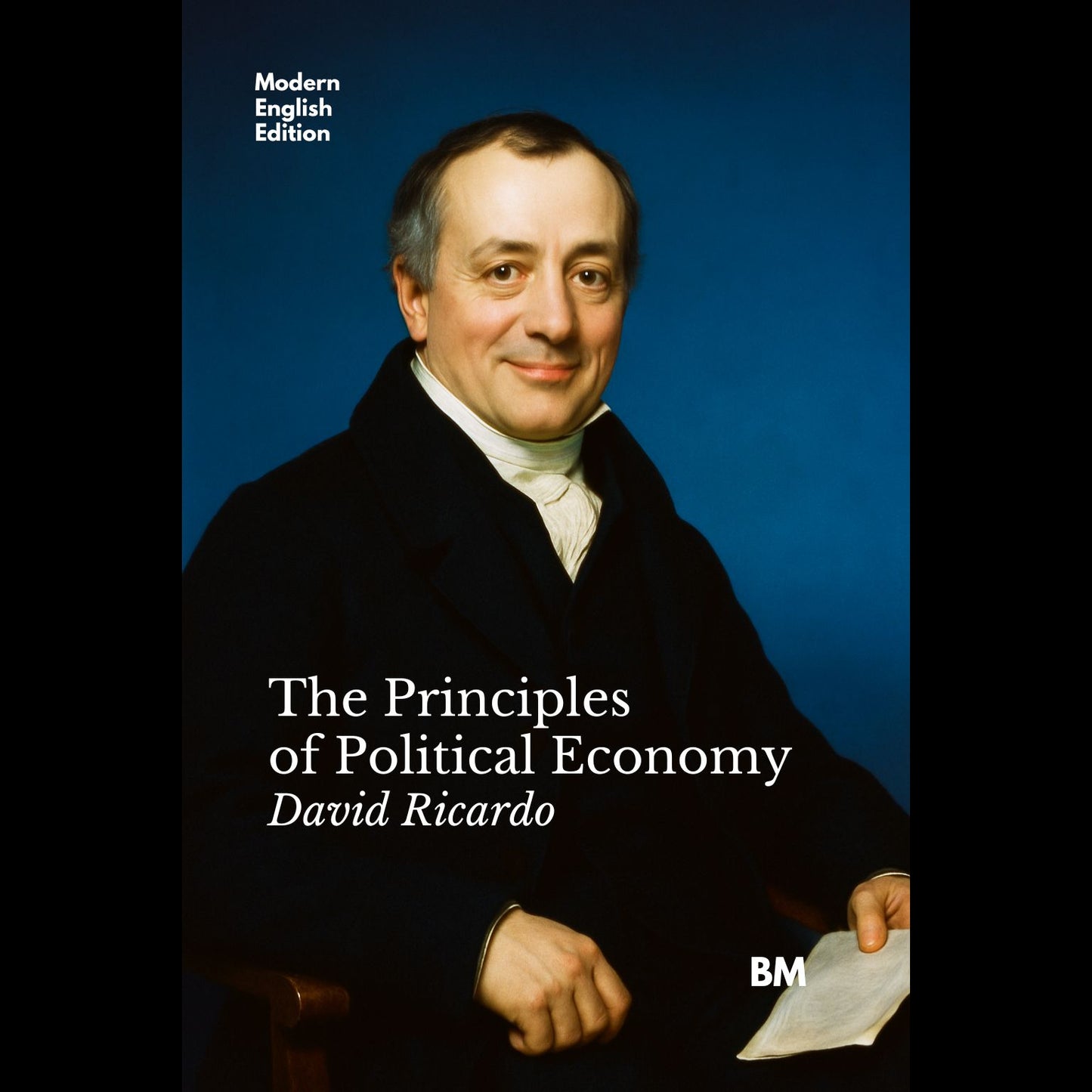
On the Principles of Political Economy, and Taxation
On the Principles of Political Economy, and Taxation
Couldn't load pickup availability
On the Principles of Political Economy, and Taxation is one of the foundational works of classical economics. David Ricardo examines the forces that shape prices, wages, profits, rent, and the distribution of wealth, building his arguments through tightly reasoned analysis rather than anecdote or policy slogan. The book is best known for its theory of rent, its treatment of value, and its influential account of how economic growth can be constrained by land scarcity and competing claims on output.
This edition presents the work in clear modern language while preserving the substance, structure, and force of the original. Readers will encounter a text that is compact but intellectually demanding, famous for its precision and its willingness to pursue economic logic to its conclusions. Unlike later textbook summaries, Ricardo’s own arguments reveal how central his ideas were to the development of economics as a systematic discipline.
For anyone interested in the origins of modern economic thought, this is a major primary text that continues to shape how economists and historians think about markets, distribution, and taxation.
Why it still matters
Ricardo’s ideas remain relevant wherever people debate inequality, taxation, land values, wages, profits, and the limits of growth. His analysis of economic distribution still informs discussions of who captures value in an economy, why rent can rise without corresponding productive effort, and how policy choices affect incentives and social outcomes. Even when readers disagree with his conclusions, the framework remains useful for understanding long-running tensions in economic policy.
What makes this edition distinctive
What sets this book apart is its austere, analytical method and its focus on the distribution of wealth rather than on markets as isolated mechanisms. Ricardo is especially important for his theory of rent and his careful distinction between the earnings of landowners, workers, and capitalists. Compared with broader moral-philosophical works on commerce, this text is narrower, more mathematical in spirit, and far more influential in shaping technical economic theory.
Who this is for
This book will appeal to readers of economic history, students of political theory, and anyone curious about the intellectual roots of modern debates over taxation and inequality. It is also a strong fit for readers who want to understand the classic arguments behind rent, wages, and profits without relying on later summaries. Those interested in capitalism’s early theorists will find it especially valuable.
Historical context
First published in 1817, this work emerged during the formative period of British industrial capitalism and intense debate over the Corn Laws, rent, and the distribution of national income. Ricardo became one of the central figures of classical political economy, and this book helped establish economics as an analytical discipline distinct from moral philosophy and practical statecraft.