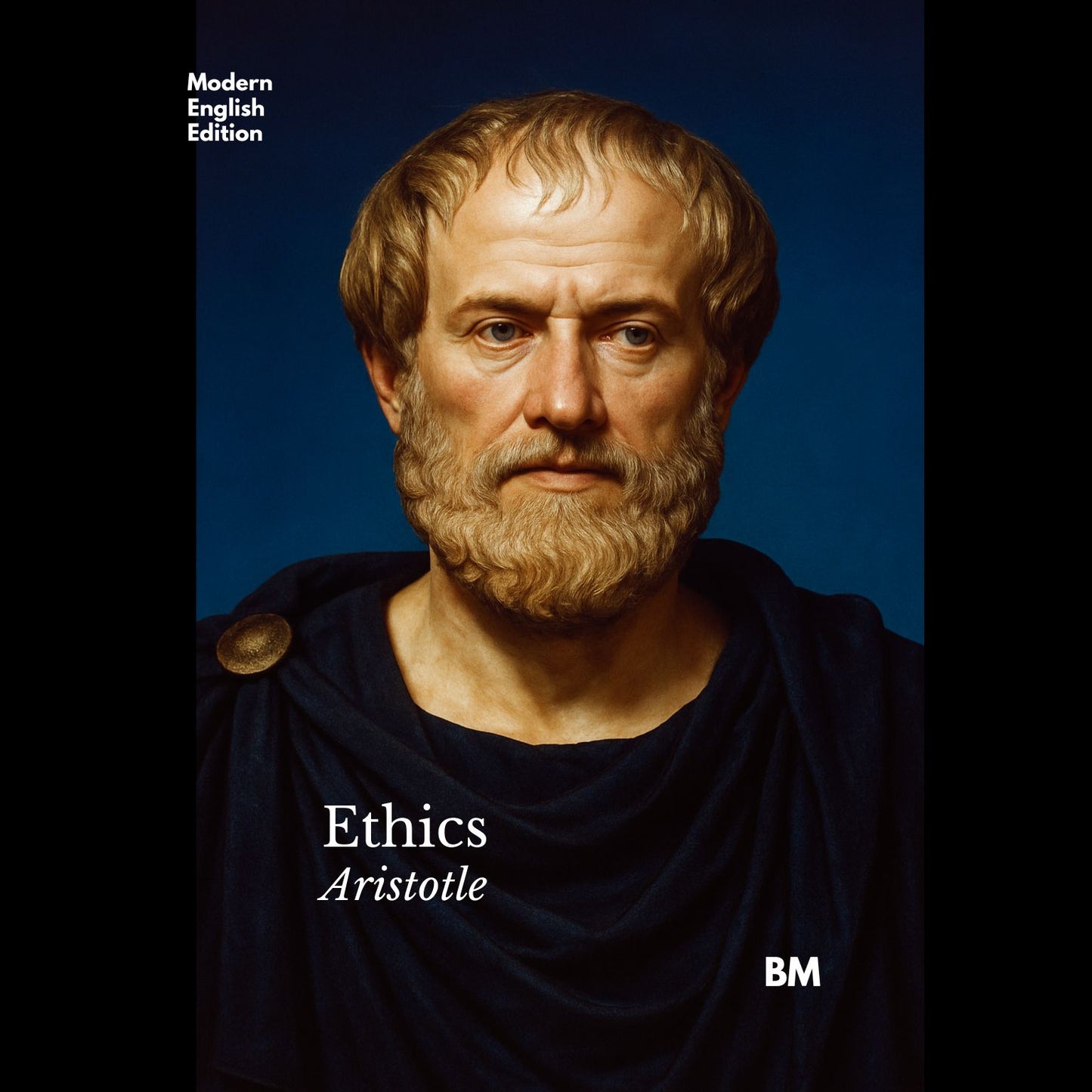
Ethics
Ethics
Couldn't load pickup availability
Ethics is one of the central texts of Western moral philosophy, exploring the question that drives the whole work: what is the highest good for a human life? Aristotle answers through a careful account of eudaimonia, virtue, habit, choice, friendship, pleasure, justice, and the disciplined exercise of practical reason. Rather than offering abstract commandments, he examines how character is shaped, how virtue is developed through repeated action, and why living well depends on cultivating judgment in real circumstances.
This work stands apart for its emphasis on moral formation over rule-following. Aristotle is interested not only in what we should do, but in what kind of people we must become. That makes the book especially significant for readers interested in ethics, leadership, education, civic life, and the long tradition of virtue ethics. This edition presents the work in clear modern language while preserving the substance, structure, and force of the original, making Aristotle’s arguments easier to follow without flattening their philosophical depth.
Why it still matters
Aristotle’s ethics remains relevant wherever people think seriously about character, responsibility, and practical judgment. In an age often shaped by rules, incentives, and quick answers, his insistence that moral excellence depends on habit, balance, and discernment still speaks directly to education, leadership, public service, parenting, and professional life. His reflections on friendship, community, and the good life also continue to resonate in a world searching for purpose beyond achievement alone.
What makes this edition distinctive
Unlike works that treat morality as a set of fixed commands or a system of abstract duties, Aristotle’s Ethics builds its case from lived human experience. It is distinctive for its attention to virtue as habit, the importance of practical wisdom in messy situations, and the role of friendship and civic life in human flourishing. Its method is deliberately measured and analytical, yet deeply grounded in ordinary conduct rather than idealized theory.
Who this is for
This book will appeal to readers who want more than a summary of Aristotle and are curious about how classical philosophy speaks to everyday life. Students of ethics, political theory, psychology, education, and leadership will find it especially valuable, as will readers drawn to Stoicism, virtue ethics, or the question of what a well-lived life actually requires. It is also a strong choice for anyone who prefers thoughtful, argument-driven classics over inspirational self-help.
Historical context
Composed in the 4th century BCE, Aristotle’s Ethics belongs to the intellectual world of classical Greece, where philosophy was closely tied to questions of politics, education, and civic life. It was later preserved and studied as one of the defining texts of the Aristotelian tradition, shaping medieval, Renaissance, and modern ethical thought.